Category Archives: Buddhism

14th January in Dalit History – B’day of Babu Mangu Ram Mugowalia – Founder of Ad-Dharmi Movement


Mangoo Ram was born on January 14, 1886 , in village Mugowal, Hoshiarpur district, where this father,Harman Dass, had left the traditional Chamar caste occupation of training and preparing hides and attempting to sell tanned hides commercially. Mangoo Ram’s mother, Atri, died when Mangoo Ram was three, so the father began to depend heavily on his sons – Mangoo and an older and a younger brother for assistance. Because the leather trade required some facility in English, Mangoo Ram’s father was forced to rely on literate members of upper castes to read sales orders and other instructions to him. In payment for their reading instructions for an hour, he would have to do a day of crude labour. For that reason, Mangoo Ram’s father was eager to have his son receive an early education.

When Mangoo Ram was seven, he was taught by a village Sadhu (Saint) and soon after attended a variety of schools in the Mugowal area (Tehsil Mahilpur of district Hoshiarpur). He also attended school in a village near Dehra Dun , where his older brother has settled. In most of the schools, Mangoo Ram was the only Scheduled Caste student. He sat at the back of the class, or even in a separate room, and listed through the open door. When he attended high school in Bajwara, he was forced to stay outside the building and listen to the classes through the windows. Once when he came inside during a heaving hailstorm, the Braham teacher beat him and put all the classroom furniture, which he had “polluted” by his presence, outside in the rain to be literally and ritually washed clean. Nonetheless, Mangoo Ram was a good student: he placed third in his class in primary school. But whereas the other good students were encouraged to become patwaris (village record-keeper) or to seek higher education, Mango Ram was encouraged to leave school and help his father at a more proper “Chamar task”. In 1905, he did quit school; he married, and for three years helped his father develop their leather trade into a thriving business.

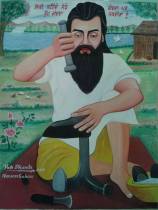
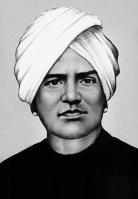
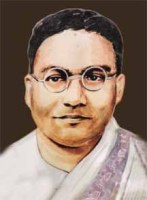
Babu Mangu Ram Mugowalia

Babu Mangu Ram Mugowalia

In 1909 America as in the air. Scores of upper caste farmers from Mangoo Ram’s area of Hoshiarpur had gone to the United States , and those who had not gone were talking about it. Mangoo Ram decided to go also. He persuaded his father that it would be good for the business – he would send money back from America – and his father responded by giving him some savings from the family business. Amid assurances from some of the local Zamindars (“landowners”) and two Chamar friends set off for the new world.2

The friends turned back, but Mangoo Ram persevered and arrived in California late in 1909. For four years he picked fruit for the former Zamindars of his village who had settled in the San Joaquin valley of California . He was also employed in a sugar mill. Mangoo Ram lived first in Fresno , then in Stockton , Sacramento , EL Centro , Vacaville , Visalia , and again in Fresno.3. He did indeed make money and set his savings home.

In 1913 some of the Punjabi settlers in California were forming a militant nationalist organisation. Mangoo Ram joined this group, the Ghadar movement, as a full-time worker in San Francisco . He was struck by the fact that, as he was later to say, “it was a new society; we were treated as equal”4. There were not many Scheduled Caste persons in the Ghadar movement, however; Mangoo Ram recalls only one other Chamar besides himself.

Initially Mangoo Ram played only a minor role in the organisation,, but in 1915 he volunteered to be one of five Ghadrites to participate in a dangerous mission involving smuggled weapons shipped from California to the Punjab . He was chosen for the task by the main whom he identifies as the “leader of the Ghadar” party at that time.” Sohan Singh Bakhna5. The secretary of the Los Angeles where they boarded an intermediary boat after collecting all their personal identification. For the rest of the saga, Mangoo Ram would be known by a Muslim pseudonym, Nizamuddin.
Continue reading

5 Comments

Filed under Babu Mangu Ram Mugowalia, Buddhism, Caste Discrimination, Dalit-Bahujans, Today in Dalit History, Today in History

12th -13th January in Dalit History – Reiteration of leaving Hinduism by Dr. Ambedkar


12 – 13 Jan 1936:  The Depressed Classes Conference was held at Pune. Dr. Ambedkar reiterated his resolve of the Yeola Conference to leave Hinduism. The conference was presided over by Rav Bahadur N. Shina Raj.

1

13 Jan 1946: Dr. Ambedkar returned to Bombay from Delhi by train and left the same day to Sholapur where he addressed a public meeting.

3 Comments

Filed under Buddhism, Dalit-Bahujans, Dr B R Ambedkar, Equal Rights, Today in Dalit History, Today in History

Dr B R Ambedkar’s original voice and pictures


The Columbia University conferred an honorary Degree of Doctor of Laws on Dr.Ambedkar

The Columbia University conferred an honorary Degree of Doctor of Laws on Dr.Ambedkar

Also check out the original photos of Dr. B. R. Ambedkar from here.

4 Comments

Filed under Buddha, Buddhism, Caste Discrimination, Dalit-Bahujans, Documentary, Dr B R Ambedkar, Equal Rights

10th January in Dalit History – Plight of the peasants speech by Mahatma Jyotiba Phule


10 Jan 1882: Mahatma Jyotiba Phule delivered a speech on ‘Plight of the peasants’in Mumbai.

10 Jan 1938: In the presence of Dr. B.R Ambedkar a Raythu Coolie rally was organized in Bombay (present Mumbai).

Peasants from all over the country participated and their demands were to get minimum wage for agriculture labour, taxes should be taken away, Botti system should be followed and land should be given by the Government on ration system

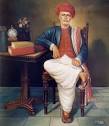
Mahatma Jyotiba Phule

Mahatma Jyotiba Phule

10 Jan 1946: Dr. Ambedkar was interviewed by a delegation of the British Parliament.

The delegation comprising of ten members first talked with Mohammed Ali Jinnah for two hours. After that eight members had a 90 minute talk with Dr. Ambedkar. Then came the turn of Jawaharlal Nehru. Immediately after the interview, Dr. Ambedkar took a train to return to Bombay (presently Mumbai).

5 Comments

Filed under Buddhism, Caste Discrimination, Dalit-Bahujans, Dr B R Ambedkar, Today in Dalit History, Today in History

9th January in Dalit History – Dr. Ambedkar at the fourth sitting of Round Table Conference in London


9 January 1930: Leadership cannot be imposed, it must be accepted by those on whose behalf it is claimed – Dr. Ambedkar

Janta newspaper reported the following: ‘The greatest presumption on Gandhi’s part at the Round Table Conference was that he claimed that he represented the depressed classes and not Dr. Ambedkar…. Leadership cannot be imposed, it must be accepted by those on whose behalf it is claimed.’

9 January 1931: Dr. Ambedkar at the fourth sitting of Round Table Conference in London, recommended transfer of police powers from minister to the Governor in times of imposition of emergency[1]  

Dr. Ambedkar at the Round Table Conference

Dr. Ambedkar at the Round Table Conference

This was the fourth sitting of Round Table Conference in London on the sub-committee No VII where the Police Act was being deliberated.

Mr. Zafrullah Khan : If I may add just this. Perhaps the members of this Committee are not all aware that both the Federal Structure Sub-Committee and the Joint Sub-Committee set up by Sub-Committees Nos. I and II have suggested quite a large number of enactments on comparatively unimportant subjects to be placed in that list under Section 80(3)(h)„ and if we put the Police Act under that it will not contravene any principles whatever.

Dr. Ambedkar: I am in general agreement with Mr. Zafrullah Khan. The reason why the Police Act is not placed in the Schedule today is that the subject is a reserved subject, therefore as a matter of fact the Government of India has a complete control over the Department of Law and Order; and when the Department of Law and Order comes to be transferred the position will be altogether different. I think it will be necessary to consider whether we should not at least for the transitional period, consider the necessity of certain safeguards at least for keeping such as they exist at the present time.  I personally am in favour of the suggestion that is Police Act should be included in the Schedule which requires today the previous sanction of the Governor-General or the Government of India. There is another point to which I should like to draw your attention with respect to the question of the Police and the Department  of Law and Order, a point which I raised also in the Provincial Constitution Sub-Committee. This question has been considered, of course, from the standpoint of the responsibility of the future Provincial (State) Governments.  It seems to me that this question has also to be considered from the standpoint of the different minorities in the Provinces and the emergency occasions which may arise on occasions of communal trouble and such other emergencies.  It seems to me that it is indeed a great safeguard for the minorities in the different Provinces to know which officer belonging to what community is going to administer law and order in that particular locality when a communal riot has taken place.  We are all aware that all Police Officers are accused of partiality and of showing favour to one community or the other.  There may not be sufficient justification for that accusation; but there maybe cases when there may be abundant justification for the partiality of the officers operating law and order in those particular localities. It seems to me that it is very necessary in the interests of the protection of the minorities that the transfer and posting of Police Officers should not be, at least in times of emergency, in the hands of Ministers. It may be that a Minister who may have a communal majority in the Province may on any particular occasion shift a Police Officer who may not favour the particular community to which he belongs.

Mr. Zafarullah Khan : Ordinarily the Inspector-General does it.

Dr. Ambedkar : I know that in the Bombay Presidency a great row was created on account of the transfer of Police Officers. I do not know whether it was done under the Inspectorof Police or by the Officer in charge; but I think that is a great safeguard which it is necessary to provide for in the future Constitution of India.  My specific proposal is this, that in cases of emergency, as a riot or communal trouble takes place, the Governor should have over-riding powers over the Minister in different localities with regard to the Police.

  Continue reading

1 Comment

Filed under Buddhism, Caste Discrimination, Dalit-Bahujans, Dr B R Ambedkar, Today in Dalit History, Today in History

8th January in Dalit History – Buddhist Flag Day


8th January: Buddhist Flag Day

The Buddhist flag is a modern creation and it was jointly designed by Mr J.R. de Silva and Colonel Henry Steele Olcott (American journalist) to mark the revival of Buddhism in Ceylon (presently Sri Lanka) in 1880. They designed a flag from the six colours of the aura that shone around the body and head of the Buddha after His Enlightenment. The Buddhist flag and American flag were draped on Colonel’s dead body in 1907 before his cremation.

The flag later came to symbolize the unity of Buddhists. Thereafter, it has been used worldwide and has been used in nearly 60 countries during Buddhist festive seasons, particularly during the Vesak celebrations.  The Buddhist Flag was first hoisted in 1885 in Sri Lanka. It is a symbol of faith and peace used throughout the world to represent the Buddhist faith and to mark the revival of Buddhism. It was accepted as the International Buddhist Flag by the 1952 World Buddhist Congress.

There are five vertical stripes of red, yellow, blue, white and orange. The sixth colour is a compound of the first five, but for design purposes its five ingredients are all shown in small horizontal stripes on the flag.

The horizontal bars signify peace and harmony between all races through out the world. The vertical bars represent eternal peace within the world.

In simple terms, the Buddhist Flag implies that there is no discrimination of races, nationality, areas or skin colour; that every living being possess the Buddha Nature and all have the potential to become a Buddha. The colours symbolise the perfection of Buddhahood and the Dharma.

The Blue light that radiated from the Buddha’s hair symbolises the spirit of Universal Compassion for all beings. It also represents the noble quality of “confidence” of the Buddha.

The Yellow light that radiated from the Buddha’s epidermis symbolises the Middle Path which avoids all extremes and brings balance and liberation. It also represents the noble quality of “holiness” of the Buddha.

The Red light that radiated from the Buddha’s flesh symbolises the blessings that the practice of the Buddha’s Teaching brings. It signifies achievement, wisdom, virtue, fortune and dignity. It also represents the noble quality of “wisdom” of the Buddha.

The White light that radiated from the Buddha’s bones and teeth symbolises the purity of the Buddha’s Teaching and the liberation it brings. It also represents the noble quality of “purity” of the Buddha.

The Orange light that radiated from the Buddha’s palms, heels and lips symbolises the unshakable Wisdom of the Buddha’s Teaching. It also represents the noble quality of “absence of desire” of the Buddha.

Buddhist flag

8 Jan 1934: Dr. Ambedkar returned by Victoria to Bombay (presently Mumbai) from London’s round table conference. [1]

He was in high spirits and talked gaily with his friends and admirers. In an interview which he gave at the Pier he said that the Joint Committee might modify the proposals made in the White Paper, but, in the main, they would be accepted. “We should accept them and agitate for more. I will not sit with folded hands hands and do nothing”, he added.

Continue reading

7 Comments

Filed under Buddhism, Caste Discrimination, Dalit-Bahujans, Dr B R Ambedkar, Today in Dalit History

7th January in Dalit History – Provincial (State) Civil services due to Dr. Ambedkar’s efforts


7 January 1931: Dr. Ambedkar, at the second sitting of Round Table Conference in London, recommended provincial autonomy by allowing to ‘cut their coats according to their cloth.’[1]  

This was the seond sitting of Round Table Conference in London on the sub-committee No VII where Indianisaton of Indian Civil Service was being delieberated.

Dr. Ambedkar: This question has to be considered from more than one point of view. There is, first of all, the point of view of Provincial autonomy. We are framing a Constitution in which we propose to give as large a degree of Provincial autonomy to the provinces as possible, and it seems to me that no province can be deemed to have Provincial autonomy if it has not the right to regulate the Civil Service that is going to work in its area. There is another and very important point of view, namely, finance. When we have an All-India Civil Service we have a fixed scale of pay. Salaries, remunerations, and other privileges are on a scale which is somewhat remote from what would be obtainable in the various provinces. A Civil Service that will not be costly to Bombay or Bengal may be costly to smaller and poorer provinces, like Assam, Sind, the North-West Frontier Province, and Punjab, and it may be that these provinces will feel themselves satisfied with a little less efficient service than the All-India basis would give them. Having regard to finance at their command, they may regard the brains and efficiency obtainable as quite sufficient for their purpose. Finally, I agree with Mr. Basu regard to specialisation.  I do not understand how the passing of an  examination like that of the I.C.S. can give any man the competence to serve in certain specialised Department.  A man was passed his I.C.S. examination, with mathematics as a special subject, may be placed in the  Department of Agriculture or in that of Indian currency.  We ought to have a Service which not merely assures a certain standard of education in those who participate, but also allow for a certain degree of specialisation.  It is  necessary, in my view, that the All-India character of some of these Services should now cease, and the provinces should be allowed liberty to cut their  coats according to their cloth. 

Sir A. P. Patro : The objection which has been raised by Dr. Ambedkar is a very relevant one.

Chairman : Mr. Basu’s point of view on Dr. Ambedkar’s remarks should clearly be considered. We should be careful to make it plain that in recommending recruitment for the I.C.S. we do not regard the I.C.S. as perfect, good though it is, or as a thing which must be continued for ever on exactly the same basis. It will be necessary to do whatever is possible to remould and recast it. Those of Dr. Ambedkar’s school of thought suggest that the All-India Services should be done away with and small Provincial Services set up in their stead.

Dr. Ambedkar: I think that I should make my position clear. I hold, with the rest of the members of this Committee, that it is very necessary to have a European element in the Service, but I do not share the view of the noble Lord, Lord Zetland, when he said that if you make the Service provincial it will dry up the source of recruitment.

Chairman: The suggestion is that we should fix 1939, or any other date you like. There is no magic in a date. The suggestion is that we should fix some date, and make it plain that thereafter it is a matter for the Government of India to consider. That is the suggestion which I make in order to try to meet everybody.

Dr. Ambedkar: My view is that your recommendations should be applicable only to the Indian Civil Service and the Indian Police Service.

Chairman: I would agree to that, and I will make that plain.

cropped-562218_301902399885875_669993624_n.jpg

On the basis of the discussions in the Round Table Conferences, the British Government prepared the white Paper Proposals which formed the basis of the Government of India Act 1935[2]. Subsequently, The Government of India Act, 1935 provided for the establishment of a Public Service Commission for each Province. Accordingly, under the 1935 Act seven Public Service Commissions were established in 1937 for the provinces of Assam (at Shillong), Bengal (at Calcutta), Bombay and Sindh (at Bombay), Central Provinces, Bihar and Orissa (at Ranchi), Madras (at Madras), Punjab and North-West (at Lahore) and the United Provinces (at Allahabad). All the State Public Service Commissions including the successors of the older Provincial Public Service Commissions came to be established after the reorganization of States after independence.

Continue reading

5 Comments

Filed under Buddhism, Caste Discrimination, Dalit-Bahujans, Dr B R Ambedkar, Today in Dalit History, Today in History

Indian Thinking!


Leave a comment

Filed under ambedkar, Buddhism, Caste Discrimination, Crazy India, Dalit News, Hinduism, India, indian buddhism, lord buddha, Slavery, Slums in India, Untouchable