Category Archives: Dalit Bahujan Ideals

विद्रोह की मशाल से समाज को रोशनी – कवियित्री भी थी सावित्री बाई फुले


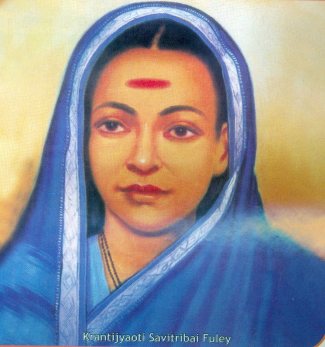
cccयह जानकर गहरा आश्चर्य होता है कि 18 वीं शताब्दी में भारत की पहली अध्यापिका तथा सामाजिक क्रांति की अग्रदूत सावित्रीबाई फुले एक प्रखर, निर्भीक, चेतना सम्पन्न, तर्कशील, दार्शनिक, स्त्रीवादीख्याति प्राप्त लोकप्रिय कवयित्री, अपनी पूरी प्रतिभा और ताकत के साथ उपस्थित होती है लेकिन किसी की निगाह उन पर जातीभी नहीं? या फिर दूसरे शब्दों में कहूं तो उनके योगदान पर, मौन धारण कर लिया जाता है। सवाल है इस मौन का, अवहेलना और उपेक्षा का क्या कारण है? क्या इसका एकमात्र कारण उनका शूद्र तबके में जन्म लेना और दूसरा स्त्री होना माना जाए?सावित्रीबाई फुले का पूरा जीवन समाज के वंचित तबकों, खासकर स्त्री और दलितों के अधिकारों के लिए संघर्ष और सहयोग में बीता। ज्योतिबा संग सावित्रीबाई फुले ने जब क्रूर ब्राह्मणी पेशवाराज का विरोध करते हुए,लड़कियों के लिए स्कूल खोलने से लेकर तत्कालीन समाज में व्याप्त तमाम दलित-शूद्र-स्त्री विरोधी सामाजिक, नैतिकऔर धार्मिक रूढ़ियों-आडंबरों-अंधविश्वासों के खिलाफ मजबूती से बढ-चढकर डंके की चोट पर जंगलड़ने की ठानी, तब इस जंग में दुश्मन के खिलाफ लडाई का एक मजबूत हथियार बना उनका स्वरचित साहित्य।इसका उन्होंने प्रतिक्रियावादी ताकतों को कड़ा जबाब देने के लिए बहुत खूबसूरती से इस्तेमाल किया। सावित्रीबाई फुले के साहित्य में उनकी कविताएं, पत्र, भाषण, लेख, पुस्तकें आदि शामिल है।

Read also – Savitribai Phule: The Mother Of Modern Education

कवयित्री सावित्रीबाई बाई फुले ने अपने जीवन काल में दो काव्य पुस्तकों की रचना की, जिनमें उनका पहलासंग्रह‘काव्य-फुले’ 1854 में तब छपा; जब वे मात्र तेईस वर्ष की ही थी। उनका दूसरा काव्य-संग्रह ‘बावनकशी सुबोधरत्नाकर’ 1891 में आया, जिसको सावित्रीबाई फुले ने अपने जीवनसाथी ज्योतिबा फुले की परिनिर्वाण प्राप्ति के बाद उनकी जीवनी रूप में लिखा था।

Read also – Poems by Savitribai Phule

अठारहवीं और उन्नीसवीं शताब्दी में ब्राह्मणवाद का कट्टरतम रूप अपने चरमोत्कर्ष पर था। उस समय सवर्ण हिन्दू समाज और उसके ठेकेदारों द्वारा शूद्र, दलितों और स्त्रियों पर किए जा रहे अत्याचार-उत्पीड़न-शोषण की कोई सीमा नहीं थी। बाबा साहेब ने उस समय की हालत का वर्णन अपनी पुस्तक ‘एनिहिलेशन ऑफ कास्ट’ में करते हुए कहा है-‘पेशेवाओं के शासनकाल में, महाराष्ट्र में, इन अछूतों को उस सड़क पर चलने की आज्ञा नही थी, जिस पर कोई सवर्ण हिन्दू चल रहा हो। इनके लिए आदेश था कि अपनी कलाई में या गले में काला धागा बांधे, ताकि हिन्दू इन्हें भूल से भी ना छू लें। पेशवाओं की राजधानी पूना में तो इन अछूतों के लिए यह आदेश था कि ये कमर में झाडू बांधकर चलें, ताकि इनके पैरों के चिह्न झाडू से मिट जाएं और कोई हिन्दू इनके पद चिन्हों पर पैर रखकर अपवित्र न हो जाएं।अछूत अपने गले में हांडी बाँधकर चले और जब थूकना हो तो उसी में थूकें, भूमि पर पड़ें हुए अछूत के थूक पर किसी हिन्दू का पैर पड़ जाने से वह अपवित्र हो जाएगा’।

Read also – Mahatma Jotiba Phule and Savitribai Phule’s contribution towards women empowerment

ऐसी विपरित परिस्थितियों में सावित्री बाई फुले का जन्म 3 जनवरी 1931 को महाराष्ट्र के सतारा जिला के एक छोटे से ग्राम नायगांव में हुआ। मात्र 9 साल की उम्र में ग्यारह साल के ज्योतिबाके संग ब्याह दी गई। केवल सत्रह वर्ष की उम्र में ही सावित्रीबाई ने बच्चियों के एक स्कूल की अध्यापिका और प्रधानाचार्या दोनों की भूमिका को सवर्ण समाज के द्वारा उत्पन्न अड़चनों से लड़ते हुए बडी ही लगन, विश्वास और सहजता से निभाया। समता, बंधुत्व, मैत्री और न्यायपूर्ण समाज की ल़डाई के लिए, सामाजिक क्रांति को आगे बढ़ाने के लिए सावित्राबाई फुले ने साहित्य की रचना की। आज भी यह बात बहुत कम लोग जानते है कि वे एक सजग, तर्कशील, भावप्रवण, जुझारू औरक्रांतिकारी कवियित्री थी। मात्र 23 साल की उम्र में उनका पहला काव्य संग्रह काव्य-फुले आ गया था, जिसमें उन्होंने धर्म, धर्मशास्त्र, धार्मिक पाखंडों और कुरीतियों के खिलाफ जम कर लिखा। औरतों की सामाजिक स्थिति पर कविताएं लिखी और उनकी बुरी स्थिति के लिए जिम्मेदार धर्म, जाति, ब्राह्मणवाद और पितृसत्ता पर कड़ा प्रहार किया। अपनी एक कविता में वे दलितों औऱ बहुजनों को समाज में बैठीअज्ञानता को पहचान कर, उसे पकड़कर कुचल- कुचल कर मारने के लिए कहती है क्योंकि यह अज्ञानता यानी अशिक्षा ही दलित बहुजन और स्त्री समाज की दुश्मन है। जिससे जानबूझकर सोची समझी साजिश के तहत वंचित समूह को दूर रखा गया है।

Read also – ‘First Lady’ Teacher of India: Savitribai Phule

उसका नाम है अज्ञान
उसे धर दबोचो, मजबूत पकड़कर पीटो
और उसे जीवन से भगा दो

Continue reading

6 Comments

Filed under Dalit, Dalit Bahujan Ideals, Dalit History, Dr B R Ambedkar, Savitribai Phule

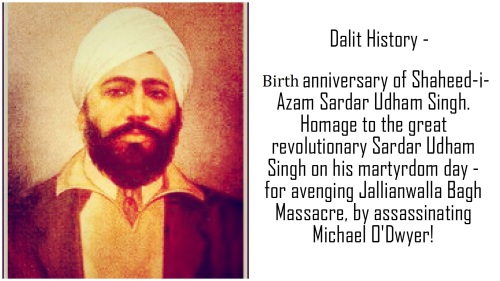
26th December (1899) in Dalit History – Birth Anniversary of Saheed Udham Singh


Why don’t governments give importance to Saheed Udham Singh? Is it because he was Dalit? Why does government give so much importance to Bhagat Singh and his colleagues, is it because he was Jat Sikh, who consider themselves as par with upper castes and better than other Sikhs? Rajguru was from Maharashtra and belonged with Deshastha Brahmin community. Sukhdev Thapar was Khatri Sikh again they consider themselves nothing less than kshatriyas! Saheed Udham Singh suffered so much in life but has been ignored by governments.

Read also – Shaheed Udham Singh’s Last Words

Udham Singh (second from the left) being taken from 10 Caxton Hall after the assassination of Michael O'Dwyer

Udham Singh (second from the left) being taken from 10 Caxton Hall after the assassination of Michael O’Dwyer

Check also – Video traces Shaheed Udham Singh’s life

Udham Singh (26 December 1899 – 31 July 1940) was an Indian revolutionary and a brave hearted man best known for assassinating Michael O’Dwyer on 13 March 1940 in what has been described as an avenging of the Jallianwalla Bagh Massacre.Singh is a prominent figure of the Indian independence struggle. He is sometimes referred to as Shaheed-i-Azam Sardar Udham Singh.

26th December

Check also – Shaheed Udham Singh’s Last Words

On 13 March 1940, Michael O’Dwyer was scheduled to speak at a joint meeting of the East India Association and the Central Asian Society (now Royal Society for Asian Affairs) at Caxton Hall. Singh concealed his revolver in a book, entered the hall, and stood against the wall. As the meeting concluded, Singh shot O’Dwyer twice as he moved towards the speaking platform, killing him immediately.

On 1 April 1940, Singh was formally charged with the murder of Michael O’Dwyer. While awaiting trial in Brixton Prison, Singh went on a 42-day hunger strike and had to be forcibly fed.

When asked about his motivation, Singh explained:

I did it because I had a grudge against him. He deserved it. He was the real culprit. He wanted to crush the spirit of my people, so I have crushed him. For full 21 years, I have been trying to wreak vengeance. I am happy that I have done the job. I am not scared of death. I am dying for my country. I have seen my people starving in India under the British rule. I have protested against this, it was my duty. What a greater honour could be bestowed on me than death for the sake of my motherland?

Udham3

Did you know?

Shaheed-i-Azam Sardar Udham Singh had changed his name to Ram Mohammad Singh Azad, symbolizing the equality of all faith and of the three major religions of India: Hinduism, Islam and Sikhism.

Udham Singh

Udham2

5 Comments

Filed under Dalit Bahujan Ideals, Dalit History, Dr B R Ambedkar, Udham Singh

Video traces Shaheed Udham Singh’s life


Video traces Shaheed Udham Singh’s life between the Amritsar massacre and his shooting of the British official in London. Watch it and share it with your friends.

Check also –  26th December (1899) in Dalit History – Birth Anniversary of Saheed Udham Singh

Check also – Shaheed Udham Singh’s Last Words

4 Comments

Filed under Dalit, Dalit Bahujan Ideals, Dalit History, Dr B R Ambedkar, Udham Singh

What Guru Kabir Said


Tell me, O Pandit, O religious scholar: since when have you been a Brahmin?
Don’t waste your life by continually claiming to be a Brahmin.
If you are indeed a Brahmin, born of a Brahmin mother,
then why didn’t you come by some other way?
How is it that you are a Brahmin, and I am of a low social status?
How is it that I am formed of blood, and you are made of milk?
- Guru Kabir (Sri Guru Granth Sahib, Page 324)
Kabir on Brahmin

Leave a comment

Filed under Dalit Bahujan Ideals, Dalit History, Dr B R Ambedkar, Guru Kabir

31st July (1940) in Dalit History – Death anniversary of Shaheed-i-Azam Sardar Udham Singh


31st July (1940) in Dalit History – Death anniversary of Shaheed-i-Azam Sardar Udham Singh

Why don’t governments give importance to Saheed Udham Singh? Is it because he was Dalit? Why does government give so much importance to Bhagat Singh and his colleagues, is it because he was Jat Sikh, who consider themselves as par with upper castes and better than other Sikhs? Rajguru was from Maharashtra and belonged with Deshastha Brahmin community. Sukhdev Thapar was Khatri Sikh again they consider themselves nothing less than kshatriyas! Saheed Udham Singh suffered so much in life but has been ignored by governments.

Check also – Video traces Shaheed Udham Singh’s life

31st July

Check also –  26th December (1899) in Dalit History – Birth Anniversary of Saheed Udham Singh

Udham Singh (26 December 1899 – 31 July 1940) was an Indian revolutionary and a brave hearted man best known for assassinating Michael O’Dwyer on 13 March 1940 in what has been described as an avenging of the Jallianwalla Bagh Massacre.Singh is a prominent figure of the Indian independence struggle. He is sometimes referred to as Shaheed-i-Azam Sardar Udham Singh.

Udham Singh (second from the left) being taken from 10 Caxton Hall after the assassination of Michael O'Dwyer

Udham Singh (second from the left) being taken from 10 Caxton Hall after the assassination of Michael O’Dwyer

On 13 March 1940, Michael O’Dwyer was scheduled to speak at a joint meeting of the East India Association and the Central Asian Society (now Royal Society for Asian Affairs) at Caxton Hall. Singh concealed his revolver in a book, entered the hall, and stood against the wall. As the meeting concluded, Singh shot O’Dwyer twice as he moved towards the speaking platform, killing him immediately.

On 1 April 1940, Singh was formally charged with the murder of Michael O’Dwyer. While awaiting trial in Brixton Prison, Singh went on a 42-day hunger strike and had to be forcibly fed.

When asked about his motivation, Singh explained:

I did it because I had a grudge against him. He deserved it. He was the real culprit. He wanted to crush the spirit of my people, so I have crushed him. For full 21 years, I have been trying to wreak vengeance. I am happy that I have done the job. I am not scared of death. I am dying for my country. I have seen my people starving in India under the British rule. I have protested against this, it was my duty. What a greater honour could be bestowed on me than death for the sake of my motherland?

Udham3

Did you know?

Shaheed-i-Azam Sardar Udham Singh had changed his name to Ram Mohammad Singh Azad, symbolizing the equality of all faith and of the three major religions of India: Hinduism, Islam and Sikhism.

Udham Singh


Udham2


Udham-Singh

2 Comments

Filed under Dalit Bahujan Ideals, Dalit History, Dr B R Ambedkar, Latest, Today in Dalit History

18th July (1969) in Dalit History – Death anniversary of Dalit writer – Annabhau Sathe


18th July (1969) in Dalit History – Death anniversary of Annabhau Sathe 

Annabhau Sathe was a social reformer, folk poet, and Dalit writer from Maharashtra, India. Despite lacking formal education, Sathe wrote 35 novels in the Marathi. He was follower of Dr. Ambedkar’s teachings and Sathe’s stories were testaments to Dalit self-respect and resistance.

“Dalit writers are entailed with the responsibility of liberating and shielding Dalits from the existing worldly and Hindu tortures as the long standing conventional beliefs cannot be destroyed instantly.” – Annabhau Sathe

Anna Bhau Sathe was born in the village of Wategaon near Sangli district of Maharashtra in a family belonging to the Dalit Mang community. Poverty due to caste based discriminiation had prevented Sathe from obtaining formal education. His brother Shankarbhau recounts in his biography of Sathe, titled Majhe Bhau Annabhau, that the family members worked as laborers at the site of Kalyan tunnel when it was being constructed. Kalyan is in Thane district of Maharashtra.

18th July2

Despite lack of formal education, Sathe wrote in Marathi 35 novels, one among which wasFakira (1959). Fakira, which is currently in its 19th edition, received a state government award in 1961. There are 15 collections of Sathe’s short stories. A large number of his short stories have been translated into many Indian and as many as 27 non-Indian languages. Besides novels and short stories, Sathe wrote a play, a travelogue on Russia, 12 screenplays, and 10 ballads –powade (Marathi).

Sathe wrote directly from his experiences in life, and his novels celebrate the fighting spirit in their characters who work against all odds in life.

Lok Rajya, a Maharashtra state government fortnightly, published on 1 November, 1993, had a special commemorative issue concerning Sathe. The state government also issued in 1998 a collection of his works under the title Lokshahir Annabhau Sathe Nivadak Sahitya.

To generate social awareness, Sathe organized stage performances of powade andtamasha, ethnic dances chiefly performed by women, which are popular in rural Maharashtra. He produced 14 tamasha shows. In the late 1940s, the then Home Minister of the Bombay state government Morarji Desai had banned tamasha shows, but Sathe courageously defied the ban by renaming them as lokanatya. People in Maharashtra conferred the epithet lok shahir on Sathe.

18th July3

Government of India issued stamp on Annabhau Sathe on 1st August 2002 and declared him as saint of Maharashtra. 

During the issue of a postage stamp of Anna Bhau Sathe at Chembur, Mumbai Minister Pramod Mahajan called Anna as a saint of Maharashtra. Sathe was an important mobilizer in the Samyukta Maharashtra movement. He used the medium of powade to great effect in that movement.Sathe was attracted to communism and had visited USSR. He was a founder member of the Lal Bawta Kalapathak of the Communist Party in Maharashtra.

Sathe lived a life of destitution. After spending 22 years in a Ghatkopar slum of Mumbai, Sathe moved to a modest house in Goregaon which the state government provided him in 1968, one year before he died.

Leave a comment

Filed under Dalit Bahujan Ideals, Dalit History, Dr B R Ambedkar, Latest, Today in Dalit History

What Amartya Sen said about Dr. Ambedkar


What Amartya Sen said about Dr. Ambedkar –

Dr. Ambedkar is my Father in Economics. He is true celebrated champion of the underprivileged.He deserves more than what he has achieved today. However he was highly controversial figure in his home country,though it was not the reality. His contribution in the field of economics is marvelous and will be remembered forever…

A S

10644916_1623352214561214_2120512531457249328_n


Leave a comment

Filed under Dalit Bahujan Ideals, Dr B R Ambedkar, Latest

18th June (1941) in Dalit History – Death anniversary of Ayyankali


Ayyankali, the Dalit firebrand in Kerala who fought Caste apartheid through innovation and resistance that inspires even till today. A contemporary of Ambedkar he was born into the Pulaya community in Thiruvananthapuram. He burned with the injustices his community faced. Dalits were landless and exploited, punished for crossing into caste hindu areas, and both men and women were targets of violence forced to into draconian states of undress.

In the face of this violence Ayyankali took it as his life mission to challenge every form of Caste discrimination. His rebellion began with an ox-cart. Ayyankali dared to break the Caste restrictions by riding on the public road while also wearing caste hindu clothes. Though attacked by the Upper Castes, his bold move launched the Southern Kerala movement for Dalit Rights that eventually won in 1900 the right for Dalits to walk along the public roads.

Ayyankali went further and launched the first schools for Dalits with Dalit teachers. Though the school was destroyed by upper caste thugs, this educational revolution could not be stopped. In 1907 the Travancore government passed an order mandating that all Dalit children be admitted into the schools. Despite this law, Upper Castes blocked its implementation to which Ayyankali led a statewide Dalit strike.

Through much difficulty the strike held and the battle for education extended to Dalit rights as exploitative landlords started whipping workers who dared to wear clothing and who also protested the landlords’ sexual exploitation of Dalit women. The outraged landlords started setting the homes of workers on fire. Ayyankali responded by setting the landlord houses on fire. Stricken with fear, never knowing when they might be attacked, the landlords sued for peace.

Through this and all his efforts he constantly faced terrible violence and a state that abetted caste perpetrators. He often did not hesitate to retaliate with violence seeing it as a form of raw protest of the oppressed. He even banded together teams of brave Dalit men and women and organized martial arts training for them. This group became the “Ayyankali Pada” (Ayyankali’s Army). With the failure of the state implementing the rule of law for all, he then established his own people’s courts, including a supreme court!

Finally, he took on the Caste apartheid dress code for Dalit women where Caste hindus insisted Dalit women could not cover their upper bodies. His challenge overturned this measure in 1916 and sent a message that the upper caste sexual exploitation of Dalit communities was unacceptable.

To his enduring spirit of rebellion we salute Ayyankali!

Remembering Chaliyatheruvu

In 1898, 5 years after the spectacular Villuvandi struggle when he asserted the Dalits right to use public roads, Ayyankali and his followers walked from Venganoor to Balaramapuram along the public road. Their mission was to enter Aaralummoodu Puthenkada Market. They had braved stiff opposition all along the route. However, the opposition reached a new high when they reached Chaliyatheruvu. Ayyankali instructed his followers that they should not hurt anybody. But if they were attacked they should return two blows for every one blow received.

What followed was nothing short of an armed conflict. Many lost their lives. In spite of all the physical violence, Ayyankali and his followers stood their ground.~

Watch out! Ayyankali is on his way!

In 1907, Ayyankali started Sadhujana Paripalana Sangham realizing that an organization is important to bring Dalits together across sub-caste divisions and religions.

Access to school was one of the major demands of the new organization. As a result of their efforts, the government issued a positive order in June 1907. This order gave Dalits access to schools. However, fearing opposition from the upper castes, the senior officials did not implement it.

Not a single school responded positively. The New Diwan, P. Rajagopalachari and Director of Education, Mr. Mitchell issued yet another order in 1910. However the situation did not change. Ayyankali strongly felt a need to act. On the strength of the government order, Ayyankali walked to Oorootambalam School holding Panchami’s hand. Her brother Kochukutty also accompanied them. Thus Ayyankali launched the first mass agitation in Indian history for making education accessible to all sections of society. ~

In 1960, 6 year old Ruby Bridges, accompanied by U.S. Marshals, became the first black child to enter an all-white William Frantz Elementary School in New Orleans.

Fifty years earlier, in 1910, Ayyankali had started a civil rights movement on his own. After a long drawn school entry struggle, one day he decided to brave the strong and violent upper caste opposition and holding the hand of 5 year old Panchami walked her into the Oorootambalam School in Balaramapuram in Kerala.

Yes, Ayyankali is on his way. Watch out!

Kerala had not witnessed such a spectacle before.

Those who witnessed this sight could not believe their eyes. A Dalit was openly defiling the caste system, with such spunk and dignity!

The upper-caste Nairs were enraged. For a Dalit, entering the road was itself an offence – and that too in a fancy bullock cart, mulmul mundu let down to his ankles!

This was something they had never imagined. They tried to pelt stones on him. But Ayyankali skillfully evaded the stones. A few of the Nair goons stood on the road and tried to stop him. They threatened
and cautioned him of consequences.

But nothing could stop Ayyankali. He responded to them by saying –

‘Yes, Kali is learning and he will teach you a lesson too!‘

18th June Ayyankali

Leave a comment

Filed under Ayyankali, Dalit Bahujan Ideals, Dalit History, Dr B R Ambedkar, Latest, Today in Dalit History