Tag Archives: caste system

IIT Madras – Ambedkar Periyar Student Circle banned for raising voice against caste based discrimination


Manuwadi Vivekananda and Vande Mataram Study Circle at IIT Madras are OK but Ambedkar Periyar Student Circle is Banned! Banned for speaking against superstitions and raising voice against caste based discrimination.

Caste Based Discrimination at IITs and all other higher education institutions is common in India. Shame on IIT administration and MHRD.

Ambedkar Periyar Student Circle

Ambedkar Periyar Student Circle at IIT Madras is Banned.

APSC

Ambedkar Periyar Student Circle at IIT Madras is Banned.

Shame on this Modi Government’s Ministry of HR and IIT Madras administration for banning  a student group – Ambedkar Periyar Study Circle. This is absolute misuse of power by the Sanghis and attack on fundamental right of freedom of expression and free speech. These buggers know the power of ideology of Dr Ambedkar and Periyar which is the only ideological force in India that can challenge them socially, culturally and politically.

Continue reading

8 Comments

Filed under Caste Discrimination, Casteism, Dalits Ask Dalits Demand, Dr B R Ambedkar, Equal Rights, Protest

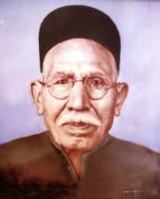
22nd April in Dalit History – Death anniversary of Babu Mangu Ram Mugowalia – Founder of Ad-Dharmi Movement


Mangoo Ram was born on January 14, 1886 , in village Mugowal, Hoshiarpur district, where this father,Harman Dass, had left the traditional Chamar caste occupation of training and preparing hides and attempting to sell tanned hides commercially. Mangoo Ram’s mother, Atri, died when Mangoo Ram was three, so the father began to depend heavily on his sons – Mangoo and an older and a younger brother for assistance. Because the leather trade required some facility in English, Mangoo Ram’s father was forced to rely on literate members of upper castes to read sales orders and other instructions to him. In payment for their reading instructions for an hour, he would have to do a day of crude labour. For that reason, Mangoo Ram’s father was eager to have his son receive an early education.

When Mangoo Ram was seven, he was taught by a village Sadhu (Saint) and soon after attended a variety of schools in the Mugowal area (Tehsil Mahilpur of district Hoshiarpur). He also attended school in a village near Dehra Dun , where his older brother has settled. In most of the schools, Mangoo Ram was the only Scheduled Caste student. He sat at the back of the class, or even in a separate room, and listed through the open door. When he attended high school in Bajwara, he was forced to stay outside the building and listen to the classes through the windows. Once when he came inside during a heaving hailstorm, the Braham teacher beat him and put all the classroom furniture, which he had “polluted” by his presence, outside in the rain to be literally and ritually washed clean. Nonetheless, Mangoo Ram was a good student: he placed third in his class in primary school. But whereas the other good students were encouraged to become patwaris (village record-keeper) or to seek higher education, Mango Ram was encouraged to leave school and help his father at a more proper “Chamar task”. In 1905, he did quit school; he married, and for three years helped his father develop their leather trade into a thriving business.

Babu Mangu Ram Mugowalia

Babu Mangu Ram Mugowalia

In 1909 America as in the air. Scores of upper caste farmers from Mangoo Ram’s area of Hoshiarpur had gone to the United States , and those who had not gone were talking about it. Mangoo Ram decided to go also. He persuaded his father that it would be good for the business – he would send money back from America – and his father responded by giving him some savings from the family business. Amid assurances from some of the local Zamindars (“landowners”) and two Chamar friends set off for the new world.2

Continue reading

2 Comments

Filed under Babu Mangu Ram Mugowalia, Dalit History, Dr B R Ambedkar, Today in Dalit History, Today in History

Why Brahmins Hate Reservation? – By E. V. R. Periyar


Communal representation is the accredited right of every nation and its government. It is the common right of all citizens belonging to every community. The main motive of the principle of communal representation is to eradicate the unequal status amongst the citizens. Communal representation is a ‘boon’ to create a society of equals. When there are communities which are forward and progressive; hampering the well being of all the other communities; there is no other go but to resort to the system of communal representation. It is by this way the suffering communities could begin to heave a sigh of relief. The need for the prolongation of the system of communal representation will automatically cease and it will be found absolutely unnecessary to continue the policy any longer, when all the communities are made as equals.

Read also – Why wearing Thaali (Mangalsutra) is disgraceful – By Periyar E. V. Ramasami

Excepting the Bráhmin community all other communities started to demand for communal representation soon after the talk of representation of Indians in governance began. For a long time, except the Brahmin community all other communities carried on agitation urging the government to implement the policy of communal representation.
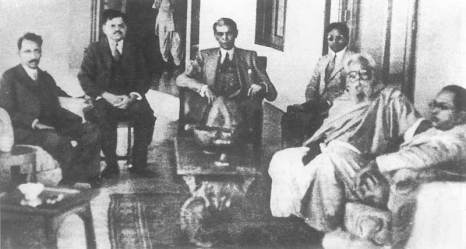
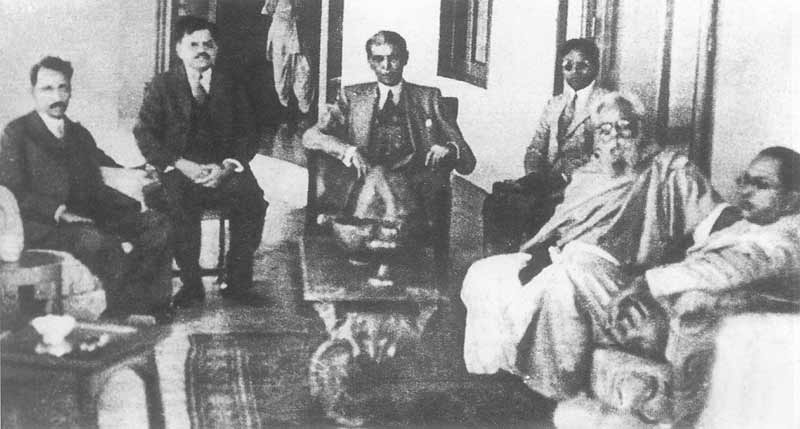
Jinnah, Periyar and Ambedkar

Jinnah, Periyar and Dr. Ambedkar

The Brahmins, particularly the Brahmins of Tamil Nadu stooped to many ways to put hurdles and create obstacles against the implementation of the policy of communal representation. They pursued trickish methods and conspired many times against the communal representation policy which was a boon to all downtrodden communities.

Read also – Periyar linked caste to religion

One could understand the Brahmins opposing the communal representation policy, if at all they had openly come forward to list out the evils of uplifting the down trodden people. All those who oppose simply said ‘no’, and no one explained why? So far no one has clearly listed out the reasons for opposing the policy of reservation. What is wrong in making all people as equals? What is wrong in giving equal opportunities for all? If there is nothing wrong in creating a socialist society, and if it is undeniable that the present society composed of unequal should be made progressive; what else can be done without creating reservations based on population through the communal representation policy. Could it be denied that there are weaker section in the society?

Read alsoPeriyar was sentenced to undergo imprisonment for the publication of his book ‘Ponmozhigal’ (Golden sayings)

Moreover, when we have allowed the classification of the society based on religion, caste and community; we cannot stand in the way of the people demanding special rights, based on religion, caste, and community. There is nothing wrong on their part or of any community in safeguarding their interests. I don’t see anything dishonest in that.

The casteism made the people go backward. Castes spell more and more ruination. Castes have made us low and have-nots. Till all these evils are eradicated and everyone attains an equal status in life, the proportional representation policy based ‘on population is indispensable. Many communities have entered the field of education only recently. All should be enabled to read and attain a civilised stage. Our people should take to education and read well. Our people should get their due share in the public services and in all other fields according to their percentage in the total population.

In this country out of 100 people only three are brahmins. Sixteen percent of the population are Adi-dravidas. 72 perent of the population are non brahmins. Should not the jobs be given to all in proportion to the population?

(Source : Collected works of Periyar E.V.R. Pg. 165-166)
7 Comments

Filed under Caste Discrimination, Dr B R Ambedkar, Equal Rights, Periyar

Why wearing Thaali (Mangalsutra) is disgraceful

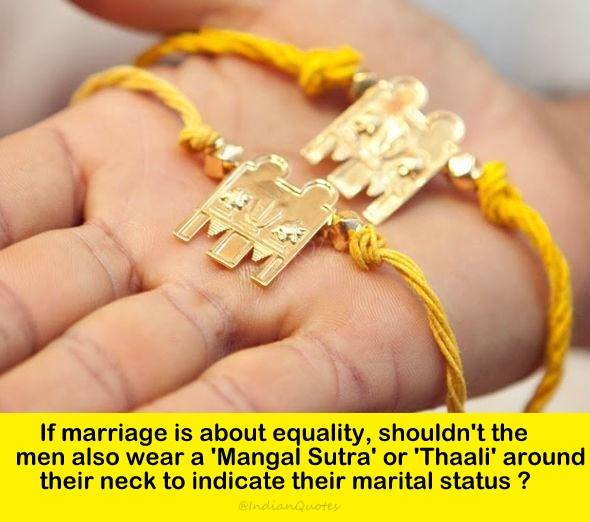
“The ritual of tying a “thaali” (or mangalsutra) around the woman’s neck at the marriage ceremony and considering her to be his slave is similar to buying a buffalo, tying a cord around its neck and dragging it home.

thali

It is considered that the practice of tying a “thaali” (or mangalsutra) around a women’s neck is to provide the identity of marital status, to establish the right as someone’s wife and to prevent other men from falling in love with that woman.

If that is so, is it not essential for men also to wear a sign that identifies their marital status and prevents other women from falling in love with them?”

– Periyar, rationalist and social activist described by United Nations as the father of social reform movement and Prophet of New Age.

Read also – 21 married women removed their “thali” on the 124th birth anniversary of B.R.Ambedkar.

4 Comments

Filed under Dr B R Ambedkar, Equal Rights, Periyar, Women RIghts

My Uncle, Few Memories and Conversion


Few weeks ago, I lost my uncle (my father’s elder brother, profoundly called “taya ji”). He was the eldest member of my family and was in eighties.  Last time, I’d met him in November, 2011 and he looked weak. My father told me about the unfortunate news over phone-call and it was like I lost someone who inspired me, who was strongest pillar of family, who knows a lot despite being illiterate, and I started crying for being helpless over phone-call. I felt lonely.

I can remember taya ji always speaking about the golden olden days of his life and his experiences. Taya ji migrated at the time of Independence from Sialkot (located in Pakistan in the north-east of Punjab province near the Chenab River) along with my grandparents. There wasn’t any official record of his birth year but as he remembered he was around 18 years old at the time India got Independence and he’d memories of it live with him. He never got a chance to go to school but he could read Hindi and Punjabi newspapers without any difficulty.

I had always asked taya ji what living was before independence. What was the life style of our people? Was it like today? Were we better off in Sialkot? Was our village in Sialkot same as it is now? Were we living in Hindu dominated or Muslim dominated village? Was there a mosque also? There were many things I asked taya ji. He always replied me with patience and I always got interesting answers from him. Interesting and strange answers.

“We didn’t even know we are under British rule.” He said once and continued, life for poor wasn’t any different as it is now and we were poor so it hardly mattered whether we were under British rulers or under Brahmins rulers of today. We were discriminated and caste system was as strong as it is today. Maybe today we can’t see open discrimination and upper caste people have devised new plans to discriminate but condition is same as it was before independence. We were offered dirty jobs; we worked in the fields as slaves and were offered nothing but few pieces of bread or rotis.

He told me once and my father confirmed me that our homes or any piece of land if any we had never used to registered under our names. We were not given lands under our names no matter even if we were capable of buying it. We had to register it under the name of higher caste people. We’d to convince upper caste landlords to let us use their name and get us register our land on their names. It wasn’t easy and enough, after registering our land on their names we had to keep them happy via working on their fields so that they don’t change their minds and grab our lands. All this continued till late 70s and I believe in many parts of India it would still be the case. Taya ji also told me that no matter how much money you had in cash at the time of separation, everything was looted from us. Partition of India was ill planned and unfortunate event. Only land was transferred and that also not in the proper way. So, it was another lesson for me and I learnt that also in early in life that is I’ll buy as much as land I can. Earlier we’re not given chance to buy a land and now if we have a right to buy a land then why to waste this opportunity?

Continue reading

5 Comments

Filed under Caste Discrimination, Dalit-Bahujans, Equal Rights