Category Archives: Dalit History Month

Dalit History Month – Incredible participation of Dalits at the World Social Fourm of Mumbai


Today’s Dalit History Month post focuses on the incredible participation of Dalits at the World Social Fourm of Mumbai.

Some background: originally the World Social Fourm (WSF) had been convened as an alternative to The World Economic Forum in Davos. Hosted for three years in Puerte Allegre, Brazil, the World Social Forum Mumbai was the first time it was held outside of Latin America. It marked the growing momentum of activists around the world who believed in the WSF slogan that “Another World is Possible” and that the WSF was the place to make those alternatives real.

To emphasize the centrality of caste to all movement questions and to demand attention to Dalit issues, four contingents of Dalit activists, started from four locations, Jammu-Kashmir (Bhim Marg), New Delhi (Buddha Marg), Kolkata (Kalinga Marg) and Kanyakumari (Tiruvalluvar Marg), to cover 20 states/union territories over 33,000 km across the country.

Read alsoDalit History Month – The Dalit Panthers

World Social Fourm of Mumbai

World Social Fourm of Mumbai

Over the course of this historic 40 day caravan the four rally teams comprised of over thousands of marchers travelled more than 33,000 km by road and marched nearly 2,000 km in different villages, towns and cities. This totaled to over 500 public rallies on the way to the WSF that were attended by nearly 1 million people with an additional 500 cultural skits (nukkad nataks – street plays, etc.).

Read also – 

When the marches arrived triumphantly at the WSF, the marchers joined Dalits from Nepal, Bangladesh, Pakistan, and Sri Lanka to continue to break the silence on caste atrocity and discrimination through seminars, demonstrations, dance, singing, and poetry. Finally at every hour Dalit Drummers marched throughout the WSF MUMBAI, the Parai drums echoing the Dalit call of justice throughout the city. The impact of this march is still felt today as Dalits remain a key part of the WSF process and the intersection of caste has continued to be emphasized for movements all around the world.

Check alsoDalit History Month – Jhalkari Bai – A Legendary Dalit Woman Warrior

Please share the information with your friends. Follow the Dalit History Month on Facebook from here and check www.dalithistory.com
1 Comment

Filed under Dalit History, Dalit History Month, Dr B R Ambedkar, Equal Rights, Today in Dalit History, Today in History

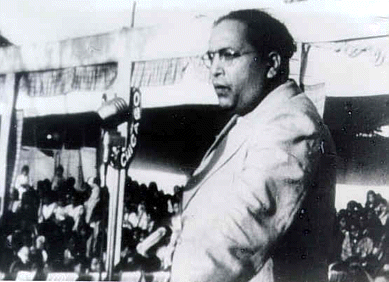
3rd April in Dalit History – Dr. B. R. Ambedkar delivered a speech on “Why religion is necessary.”


3rd April in Dalit History

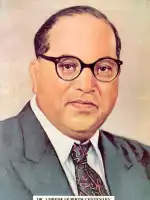
3rd April, 1955 – Dr. B. R. Ambedkar delivered a speech on “Why religion is necessary.” 

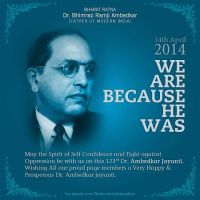
Dr Ambedkar

Dr Ambedkar

Also Check

Few rare pictures of Bahishkrit Bharat. 

Leave a comment

Filed under Dalit History, Dalit History Month, Dr B R Ambedkar, Today in Dalit History, Today in History

The Dalit Panthers


The Dalit Panthers was a social organization founded by Namdeo Dhasal, Raja Dhale, and Arun Kamble in April 1972 in Mumbai. Formed in the state of Maharashtra in the 1970s, they ideologically aligned themselves to the Black Panther movement in the United States.

Dalit Panthers

Dalit Panthers

During the same period, Dalit literature, painting, and theater challenged the very premise and nature of established art forms and their depiction of society and religion. Many of these new Dalit artists formed the first generation of the Dalit Panther movement that sought to wage an organized struggle against the varna system. Dalit Panthers visited “atrocity” sites, organized marches and rallies in villages, and raised slogans of direct militant action against their upper-caste aggressors.

Check Also – 15th January in Dalit History – Death anniversary of Namdeo Dhasal

The Dalit Panthers’ Manifesto defines Dalits as “all those who are exploited politically, economically and in the name of religion.” They classified “American imperialism” in the same category as “Hindu feudalism”; with both being examples of caste hierarchy. They also asserted that while Hindu feudalism may have spawned caste inequality, its extension by the modern Indian state had created an oppression “a hundred times more ruthless.”

Read AlsoSiddharth Vihar is gone – Place where Dalit Panthers was founded. 

Their firm stance and rallying message across Maharastra made their members frequent targets of state surveillance and brutality. Their legacy lives on in states across India, including in Tamil Nadu’s VCK Dalit Panthers Political party. Read their manifesto from here.

Please share the information with your friends. Follow the Dalit History Month on Facebook from here and also check www.dalithistory.com
4 Comments

Filed under Dalit History, Dalit History Month, Dr B R Ambedkar, Today in Dalit History, Today in History

Jhalkari Bai – A Legendary Dalit Woman Warrior


Our first Dalit History month post is about the legendary Jhalkari Bai. She was a legendary Dalit woman warrior who played a crucial role in the Indian Rebellion of 1857 during the battle of Jhansi in the women’s army of Queen Laxmibai of Jhansi.

Jhalkari Bai

Jhalkari Bai

Born into a poor Dalit family, she started her career as an ordinary soldier and eventually rose to be the Queen’s trusted advisor. At the height of the battle she disguised herself as the queen and fought to let the queen escape safely out of the fort.

As she led her brave cadre of women into the British camp, she challenged even the General of the British Forces. His reply on meeting her: “If even one per cent of Indian women were like Jhalkari; the British would soon have to leave India.”

Her story lives on in Bundelkhand region of India and inspires Dalit women everywhere!

Read more about Dalit History Month from http://www.dalithistory.com 
4 Comments

Filed under Dalit History Month, Dr B R Ambedkar, Today in Dalit History, Today in History

April – Dalit History Month


Did you know? April is celebrated as Dalit History Month. Those who don’t know history can’t make history. We must remember our heroes and celebrate. It’s a time to remember also the struggle and sacrifice that our forefathers made so that we can live better.

10410279_10154019101472195_6672953509256343706_n

We need to find more about the “truths of our rich history”, “our role models”, “our culture”, and “realities of caste” etc. Only then we can do something better for our society.

There are many things those are kept hidden from all of us (Read here few) What I see as the purpose of hiding all these facts and great achievements of Dr Ambedkar is that it is aimed at distracting Dalit-Bahujans from the right path. And that Dalit-Bahujans don’t get inspiration from their own history and smash the upper caste hegemony. As Dr Ambedkar said, “Let the slave know that he is a slave and he’ll break the chains of slavery.”

It is a time to pay tribute to all those heroes and ideals.

Read about Dalit History from here and also join the conversation on Facebook at DALIT HISTORY MONTH

Also read more about Dalit History Month from here.

Please share the information with your friends.

2 Comments

Filed under Dalit History Month, Dr B R Ambedkar, Equal Rights, Today in Dalit History, Today in History

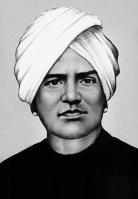
11th April (1827) in Dalit History – Birth anniversary of the Mahatma Jyotirao Phule


“Lack of education lead to lack of wisdom,

Which leads to lack of morals,

Which leads to lack  of progress,

Which leads to lack of money,

Which leads to the oppression of the lower classes,

See what state of the society one lack of education can cause!”

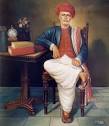
Mahatma Jyotiba Phule

Mahatma Jyotiba Phule

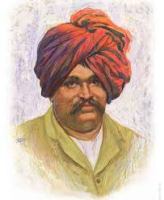
Jyotirao Phule is the Mahatma of modern India. His remarkable influence was apparent during the dark ages when women and shudras were denied their rights. His pioneering work in fields like education,agriculture, caste system, women and widow upliftment and removal of untouchability is remarkable.

Read also – What Mahatma Jotiba Phule Said

Jyotirao Govindrao Phule was born in Satara district of Maharastra state in India in a family belonging to Mali caste [shudra varna of Hindu religion] perceived to be inferior. His father, Govindrao, was a vegetable vendor. His mother died when he was nine months old. He was married at the age of 12 to Savirti Bai. His intelligence was recognised by a Muslim and a Christian neighbor, who persuaded his father to allow Jyotirao to attend the local Scottish Mission’s High School, which he completed in 1847.

Check also – Mahatma Jotiba Phule and Savitribai Phule’s contribution towards women empowerment

In 1848, an incident took place in his life that later sparked off the dalit-revolution in the Indian society. Jyotirao was invited to attend a wedding of one of his Brahmin friends. Knowing that he belonged to inferior caste, the relatives of bridegroom insulted and abused him. Jyotirao left the procession and made up his mind to defy the prevailing caste-system and social restrictions. He then started his campaign of serving the people of lower strata of society who were deprived of all their rights as human beings.

Check also – Plight of the peasants speech by Mahatma Jyotiba Phule

In 1848, he along with his wife started a school for girls in Pune– the first ever formal school for girls in India. The orthodox of the society were furious at the activities of Jyotirao. They blamed him for vitiating the norms and regulations of the society. Many accused him of acting on behalf of Christian Missionaries. But Jyotirao was firm and continued the movement. Interestingly, Jyotirao had some Brahmin friends who extended their support to make the movement successful. However he was made to leave his house with his wife for the “crime” he had performed.

Check also – Life Sketch of Mahatma Jyotiba Phule

Jyotirao had to suffer a lot many difficulties for the mission he had undertaken. The very first one of it was he did not have any female teacher to teach the girls. There was no question of a female teacher as the girls were not allowed to have education till then. Jyotirao took a bold step and educated his wife Savitribai at home who would be the first female teacher of India. Savitribai had to suffer a lot of miseries during this course. She was ridiculed by the orthodox people, mostly the priest Brahman class, on her way to school. They even did not hesitate to throw mud or cow-dung on her. That great lady took all that humiliation as a part and parcel her mission and would go to school with two sets of clothes—one to wear on roads while going to school and then another to wear at school.

Continue reading

11 Comments

Filed under Dalit History, Dalit History Month, Dalit-Bahujans, Dr B R Ambedkar